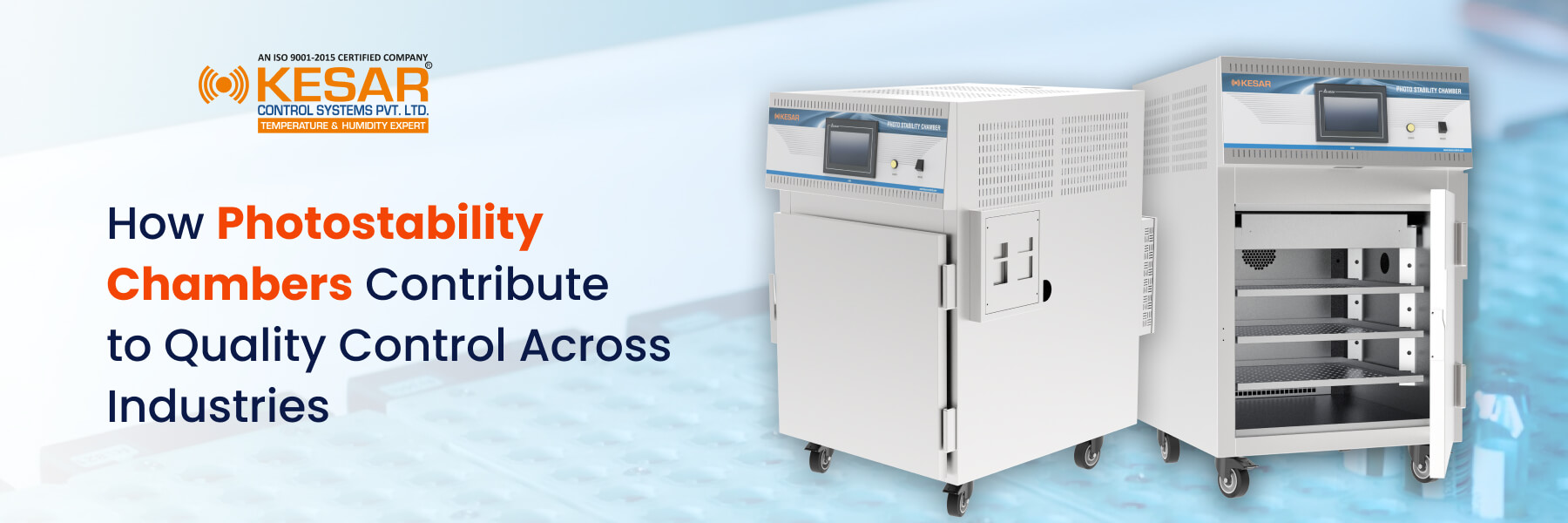
How Photostability Chambers Contribute to Quality Control Across Industries
Introduction
In today’s competitive and highly regulated industries, product stability is one of the most critical factors in ensuring safety, efficacy, and long-term success in the market. Among various stability concerns, light exposure stands out as a major cause of product degradation. Pharmaceuticals, cosmetics, food, and chemical products are all highly sensitive to ultraviolet (UV) and visible light, which can trigger unwanted chemical reactions.
This is where photostability testing plays a vital role. By simulating both natural and artificial light conditions, photostability studies reveal how products behave when exposed to light over time. To carry out these tests accurately, industries rely on photostability chambers, specialized equipment designed to replicate controlled light exposure. Companies like Kesar Control Systems manufacture advanced photostability chambers that ensure precise light and temperature conditions. These chambers safeguard product quality and help companies meet international regulatory requirements such as the ICH Q1A and ICH Q1B guidelines.
1. What is Photostability Testing?
Photostability testing is the process of analyzing how a product reacts when exposed to light. The objective is to identify whether light affects the product’s potency, appearance, chemical composition, or safety.
- Definition and Scope: In pharmaceuticals, photostability ensures drugs remain effective until the end of their shelf life. In cosmetics, it prevents discoloration, fragrance loss, or separation of ingredients. In food and beverages, it ensures freshness and packaging durability.
- Impact of Light: UV and visible light can initiate chemical breakdown, reduce therapeutic effectiveness, or even create toxic byproducts in sensitive materials.
- Lux Hours and Watt Hours: These parameters measure how much light a product has been exposed to during testing. Accurate tracking ensures reproducibility of results.the food and beverage industry
- Applications: Photostability testing is also used in packaging validation, ensuring that materials such as glass, plastics, or cartons adequately protect products. Companies trust Kesar Control Chambers for precise and reproducible testing.
2. Role of Photostability Chambers
Photostability chambers are specialized laboratory tools that mimic real-world light exposure under tightly controlled conditions.
- Simulation of Real-World Light: Equipped with fluorescent and UV lamps, these chambers replicate natural daylight as well as artificial lighting conditions.
- ICH Compliance: According to ICH Q1A (stability testing of new drug substances and products) and ICH Q1B (photostability testing), light stability tests are mandatory before regulatory approvals.
- Reproducibility and Accuracy: By maintaining consistent temperature, humidity, and light intensity, photostability chambers ensure reliable results across multiple studies.
- Regulatory Standards: Meeting ICH requirements through chamber-based testing helps industries avoid costly delays in product approval and ensures global market acceptance.
3. Importance of Quality Control
Quality Control (QC) ensures products remain safe, effective, and market-ready. Photostability testing is a key component of QC in multiple industries.
- Batch-to-Batch Consistency: Every batch must deliver the same quality, safety, and stability.
- Role in QC Departments: Photostability chambers are considered stability chambers in the QC department, helping teams perform systematic light stability studies.
- Safety, Efficacy, and Shelf Life: Medicines, foods, and cosmetics must retain their original properties throughout distribution and storage.
- Documentation for Compliance: Data generated during testing serves as evidence during audits and regulatory inspections. Labs often rely on Kesar Control for precise and user-friendly chamber controls to simplify documentation.
4. Testing Process & Best Practices
To achieve accurate results, industries follow structured photostability testing practices:
- Chamber Specifications: Uniform light distribution and precise humidity/temperature control are crucial.
- Sample Preparation: Standardizing sample orientation, size, and packaging prevents variations.
- Test Parameters: Correct lux hours and watt hours ensure compliance with international standards.
- Monitoring & Documentation: Real-time logging of chamber conditions ensures data integrity.
- Calibration & Maintenance: Regular calibration reduces errors and extends chamber lifespan.
5. Applications Across Industries
Photostability chambers are not limited to pharmaceuticals; they impact multiple industries where product stability is crucial.
- Pharmaceuticals: Drugs, vaccines, and biologics must remain effective throughout their shelf life. Photostability testing verifies stability under light, supports formulation decisions, and ensures packaging provides sufficient protection. Without this, medicines may lose potency or produce harmful breakdown products.
- Cosmetics: Products like sunscreens, creams, lotions, and perfumes are highly light-sensitive. Testing ensures these products do not discolor, degrade, or lose fragrance when exposed to UV or visible light, protecting both consumer trust and regulatory compliance.
- Food & Beverages: Exposure to light can alter the taste, texture, or nutritional value of food items. Photostability chambers help test packaging solutions (such as PET bottles or glass containers) and maintain product freshness during storage and distribution.
- Chemicals & Industrial Products: Many chemicals and industrial formulations are sensitive to light. Chambers verify the safety of adhesives, paints, and polymers under varying light conditions, ensuring product reliability during shipping and long-term storage.
6. Challenges & Key Factors in Photostability Testing
Despite their advantages, photostability chambers present some challenges.
- Stress Studies vs. Real-Time Testing: Accelerated studies save time but may not perfectly reflect real-world conditions.
- Environmental Factors: Temperature and humidity fluctuations can impact outcomes.
- Product Ingredients: Different chemical compositions react differently to light, requiring customized testing protocols.
High-quality equipment from Kesar Control helps mitigate many of these challenges with precise environmental control and consistent light distribution.
7. Laboratory Tools & Essentials for Stability Testing
Photostability chambers work alongside other laboratory tools to build a complete testing ecosystem.
- Photostability Chambers: Core equipment for controlled light exposure studies.
- BOD Incubators: Maintain biological samples under defined conditions.
- Humidity & Temperature Chambers: Add environmental variables beyond light.
- Calibration Tools: Ensure accuracy and reproducibility of results.
Conclusion
Photostability chambers are indispensable for industries where light stability determines product safety, quality, and compliance. They simulate real-world light exposure, ensure adherence to ICH Q1A and Q1B guidelines, and provide reliable data for audits and global approvals. From verifying packaging in food and beverages to safeguarding drug potency in pharmaceuticals, these chambers play a crucial role in protecting product integrity.
For companies seeking precision-engineered photostability chambers, Kesar Control Systems offers advanced, reliable, and compliant solutions. With years of expertise in manufacturing high-quality laboratory equipment, Kesar Control has become a trusted partner for industries that demand accuracy, durability, and global-standard compliance.
Ultimately, a photostability chamber is not just another piece of equipment it is a guardian of consumer trust, product integrity, and long-term market success.
Investing in such technology not only enhances product reliability but also ensures that companies can meet stringent regulatory requirements. As the pharmaceutical landscape continues to evolve, the importance of these chambers in maintaining quality and safety will only grow.
Previous Blogs

Boost Your Laboratorys Efficiency with a High Quality Walk In Stability Chamber
Introduction: Why Lab Efficiency Matters More Than Ever In todays competitive pharmaceutical, biotechnology, and research sectors, labora...

What Is a Cold Chamber? It's Features Applications and Industry Benefits
In industries where temperature-sensitive products are critical to safety, quality, and compliance, cold chambers play an essential role. From vaccine...
The Benefits of Using Cold Chambers for Preserving Sensitive Samples and Products
In today's rapidly evolving pharmaceutical and life science industries, maintaining the integrity of temperature-sensitive products is more crucia...

How to Choose a Cold Chamber Manufacturer You Can Rely On
Your Trusted Guide to Picking the Right Cold Chamber Manufacturer Choosing the right cold chamber manufacturer in India is crucial for laboratories...

Exploring the Benefits of Humidity Chambers in Indian Manufacturing
In todays quality-driven manufacturing landscape, Indian industries are embracing smarter, more advanced testing solutions to stay ahead. With rising...