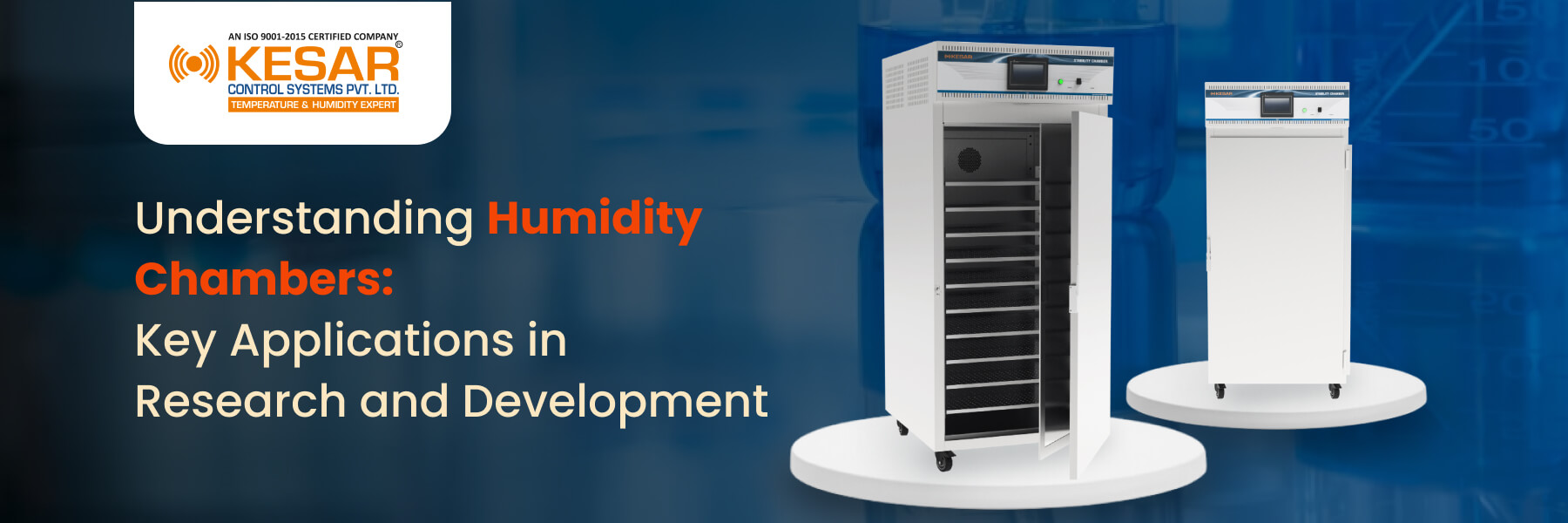
Understanding Humidity Chambers Key Applications in Research and Development
Research and development across industries demand precision, accuracy, and the ability to replicate real-world environmental conditions. Whether it’s testing the stability of a new drug, checking how packaging reacts to moisture, or evaluating the performance of electronic components, controlled environments are essential. This is where a humidity chamber becomes a critical laboratory asset. Designed by an experienced humidity chamber manufacturer, these systems allow researchers to simulate temperature and humidity fluctuations, ensuring products meet quality and durability standards before reaching the market.
What is a Humidity Chamber?
A humidity chamber is a specially designed enclosure that creates controlled levels of temperature and humidity for testing. Leading humidity chamber manufacturers in India, such as Kesar Control Systems, develop these chambers to meet strict industrial and laboratory standards. Also known as stability chambers or temperature-humidity chambers, they are indispensable tools in industries where product reliability, quality, and safety cannot be compromised.
The primary purpose of a humidity chamber is to simulate environmental conditions that a product may experience during storage, transport, or real-world use. By replicating these environments, researchers gain valuable insights into material behavior, enabling better product development and regulatory compliance.
How Does a Humidity Chamber Work?
A humidity chamber operates through precise control of temperature and moisture. Inside the insulated chamber body, heating and cooling systems regulate temperature, while humidification units add or remove moisture to maintain the required humidity levels. Advanced sensors, controllers, and monitoring systems ensure stability and accuracy throughout the testing cycle.
Modern systems developed by a professional humidity chamber manufacturer use technologies such as steam generation, ultrasonic humidification, and refrigeration-based dehumidification. These systems allow the chamber to simulate diverse conditions, from high tropical humidity to extremely dry environments, making them versatile for R&D applications.
What is the Function of a Humidity Cabinet?
Though terms like humidity chamber, test chamber, and humidity cabinet are often used interchangeably, the function remains the same, creating a stable, controlled environment. A humidity cabinet is typically used for smaller-scale testing, offering precision in a compact footprint.
Laboratories that require space efficiency often rely on these systems from a trusted humidity chamber manufacturer in India, as they provide the same performance benefits as larger environmental chambers while being easier to install and operate.
Applications of Humidity Chambers in Research and Development
The importance of a humidity chamber is best understood through its widespread applications.
Pharmaceuticals & Biotechnology
Humidity chambers are vital for drug stability testing. They simulate storage and transport conditions to ensure medicines and vaccines maintain effectiveness over time. Systems supplied by reliable humidity chamber manufacturers help pharmaceutical companies meet compliance standards and ensure patient safety.
Electronics & Electrical Components
Electronic components are highly sensitive to moisture. A humidity chamber evaluates how circuit boards, semiconductors, and connectors perform under varying humidity levels, preventing failures in consumer electronics, medical devices, and industrial equipment.
Food & Packaging Industries
Humidity chambers help assess how packaging materials withstand humid conditions. From seal integrity to shelf-life testing, these chambers ensure food safety and packaging durability.
Automotive & Aerospace
Components used in vehicles and aircraft face extreme climate variations. A humidity chamber manufacturer designs systems that replicate these harsh conditions to test coatings, plastics, adhesives, and mechanical components for reliability.
Textiles & Paper
Moisture absorption can affect material strength and quality. Testing with a humidity chamber helps evaluate resistance to shrinkage, warping, and tearing under humid conditions.
Key Features That Make Humidity Chambers Essential
Modern systems developed by a leading humidity chamber manufacturer in India come equipped with advanced features:
- Wide temperature and humidity range
- Digital control systems for precise monitoring
- Uniform air circulation
- Energy-efficient operation
- Durable, corrosion-resistant construction
These features make a humidity chamber a dependable solution for both laboratory and industrial testing.
Choosing the Right Humidity Chamber for R&D
When selecting a humidity chamber, consider:
- Required temperature and humidity range
- Sample size and chamber capacity
- Long-term performance stability
- Compliance with standards such as ICH and ASTM
Partnering with an experienced humidity chamber manufacturer like Kesar Control Systems ensures you receive equipment tailored to your R&D needs.
Future of Humidity and Environmental Test Chambers
Technological advancements are transforming the humidity chamber industry. IoT integration, cloud monitoring, and AI-driven control systems are improving precision and efficiency. Portable and energy-efficient designs are also gaining popularity, helping industries reduce operational costs and environmental impact.
Frequently Asked Questions (FAQs)
Q. What is the application of a humidity chamber?
A: A humidity chamber is used in pharmaceuticals, electronics, packaging, automotive, aerospace, textiles, and more to test product durability under controlled environmental conditions.
What is the use of a humidification chamber?
A: It regulates moisture levels to test how materials behave in specific humidity conditions.
What is a humidity chamber?
A: A humidity chamber is a testing device that simulates controlled temperature and humidity levels to evaluate product performance.
What is the function of the humidity cabinet?
A: It provides a compact, controlled testing environment for product stability and durability.
Conclusion
A humidity chamber is more than just a testing device, it is a vital bridge between research and real-world performance. From pharmaceuticals and electronics to packaging and textiles, its role in ensuring product reliability and compliance is unmatched.
By working with a trusted humidity chamber manufacturer in India like Kesar Control Systems, research and development teams gain access to high-performance environmental testing solutions that accelerate innovation, reduce risk, and enhance product quality.
Previous Blogs

How Photostability Chambers Contribute to Quality Control Across Industries
Introduction In today’s competitive and highly regulated industries, product stability is one of the most critical factors in ensuring safety...

Boost Your Laboratorys Efficiency with a High Quality Walk In Stability Chamber
Introduction: Why Lab Efficiency Matters More Than Ever In todays competitive pharmaceutical, biotechnology, and research sectors, labora...
What Is a Cold Chamber? It's Features Applications and Industry Benefits
In industries where temperature-sensitive products are critical to safety, quality, and compliance, cold chambers play an essential role. From vaccine...

The Benefits of Using Cold Chambers for Preserving Sensitive Samples and Products
In today's rapidly evolving pharmaceutical and life science industries, maintaining the integrity of temperature-sensitive products is more crucia...

How to Choose a Cold Chamber Manufacturer You Can Rely On
Your Trusted Guide to Picking the Right Cold Chamber Manufacturer Choosing the right cold chamber manufacturer in India is crucial for laboratories...