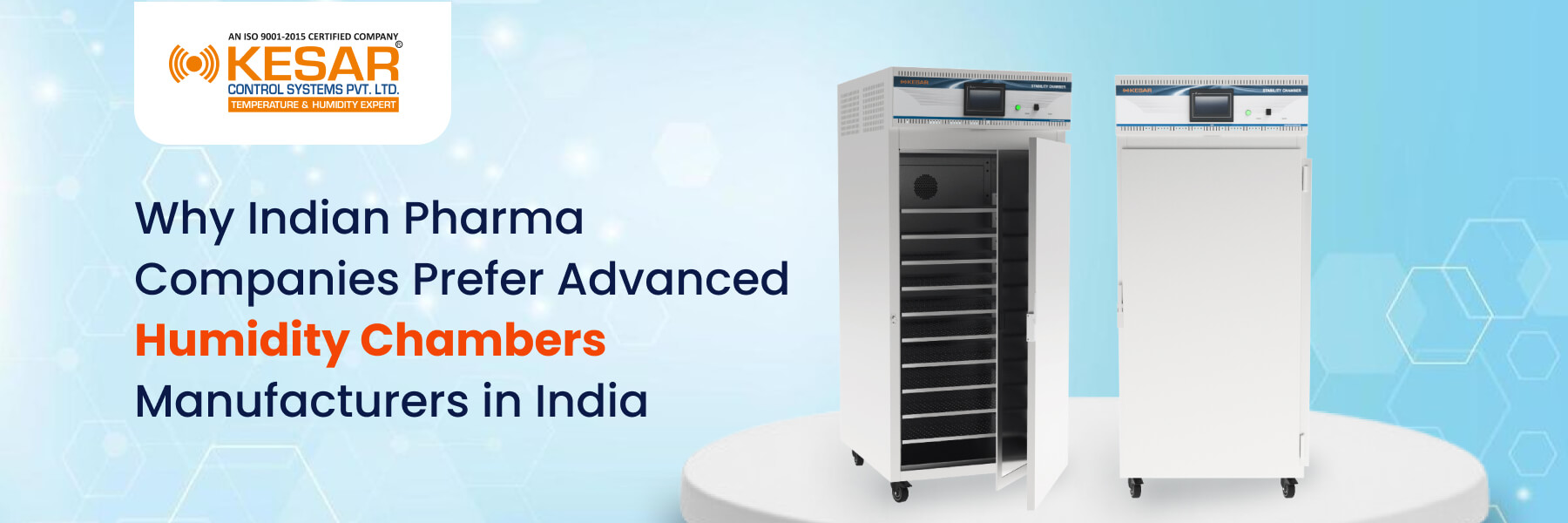
Why Indian Pharma Companies Prefer Advanced Humidity Chamber Manufacturers in India
Introduction
The Indian pharmaceutical industry is experiencing rapid growth due to increasing global demand, rising exports, and strict regulatory requirements. In such a highly competitive and regulated environment, maintaining product quality, safety, and stability is not just important—it is critical for long-term success.
To meet these expectations, pharmaceutical companies rely heavily on advanced environmental testing solutions. A reliable humidity chamber manufacturer in India plays a crucial role in providing precision-controlled systems that simulate real-world temperature and humidity conditions for accurate testing.
Companies like Kesar Control Systems offer advanced humidity chambers designed to support pharmaceutical stability studies, shelf-life determination, and compliance with global regulatory standards. These systems ensure consistent performance and reliable results across laboratory applications.
Why Humidity Control is Critical in the Pharmaceutical Industry
Humidity is one of the most sensitive environmental factors affecting pharmaceutical products. Even minor variations in moisture levels can lead to degradation of active ingredients, chemical instability, and reduced effectiveness of drugs over time.
Maintaining controlled humidity conditions is essential for:
- Ensuring drug safety and therapeutic effectiveness
- Meeting regulatory standards such as ICH and GMP
- Achieving consistent and repeatable testing results
- Preventing contamination, clumping, or physical changes
Improper humidity control can also impact packaging materials and storage conditions. Without proper environmental control, pharmaceutical companies may face product failures, compliance issues, and increased operational costs.
What is a Humidity Chamber?
A humidity chamber is a precision testing device used to replicate environmental conditions by controlling temperature and relative humidity. These chambers typically operate within ranges such as 20°C to 60°C and 40% RH to 95% RH, depending on testing requirements.
These chambers are widely used in the pharmaceutical industry to:
- Determine product shelf life
- Evaluate resistance to environmental changes
- Ensure long-term stability of drugs
- Simulate real-world storage and transport conditions
Humidity chambers include environmental chambers, temperature-humidity chambers, accelerated testing chambers, photostability chambers, and cold chambers. They are designed to operate under tight tolerances, ensuring high accuracy and repeatability.
Working Principle of a Humidity Chamber
A humidity chamber works by maintaining controlled environmental conditions within a sealed enclosure. Temperature is regulated through heating and cooling systems, while humidity is controlled using moisture generation and dehumidification mechanisms.
Sensors continuously monitor internal conditions and send feedback to control systems such as PID or PLC controllers. This enables precise real-time adjustments and ensures stable testing conditions.
Advanced systems from Kesar Control Systems are equipped with high-precision sensors and PLC/PID-based controls, ensuring minimal variation and consistent performance during long-duration testing. Uniform airflow distribution further ensures that all samples are exposed to identical conditions.
Role of Humidity Chambers in Pharmaceutical Manufacturing
Humidity chambers play a vital role in different stages of pharmaceutical manufacturing and testing. They help evaluate how products behave under controlled environmental conditions over defined time periods.
Key applications include:
- Drug stability testing
- Shelf-life determination
- Packaging integrity testing
- Raw material evaluation
- Accelerated aging studies
These chambers are often used alongside stability chambers and walk-in chambers for large-scale testing. This integrated approach ensures pharmaceutical products meet quality standards and regulatory requirements before reaching the market.
Why Indian Pharma Companies Prefer Advanced Manufacturers
Indian pharmaceutical companies prefer advanced humidity chamber manufacturers in India for several key reasons:
1. Compliance with Regulatory Standards
Modern humidity chambers are designed to meet international guidelines such as ICH, GMP, and WHO standards, ensuring global acceptance.
2. High Precision and Accuracy
Advanced systems provide precise control of temperature and humidity, reducing variation and improving reliability in testing.
3. Cost-Effective Solutions
Indian manufacturers offer high-quality equipment at competitive prices, making them suitable for both small laboratories and large pharmaceutical companies.
4. Customization and Flexibility
Manufacturers provide different chamber sizes, configurations, and control systems based on specific laboratory requirements and testing needs.
5. Reliable After-Sales Support
Proper installation, maintenance, calibration, and technical support ensure long-term performance and efficiency of the equipment.
Why Choose Kesar Control Systems for Humidity Chambers?
Selecting the right manufacturer is critical for achieving accurate and compliant testing. Kesar Control Systems is a trusted humidity chamber manufacturer in India for pharmaceutical applications.
Key advantages include:
- Advanced PLC and PID-based control systems
- High accuracy (±0.2°C & ±2% RH) with minimal variation
- Wide capacity range from 90 LTR to 1000 LTR
- Durable stainless steel construction (S.S. 304 / S.S. 316)
- Compliance-ready systems with 21 CFR Part-11 support
- Strong after-sales service and technical support
Key Features of Advanced Humidity Chambers
Modern humidity chambers are equipped with features that ensure efficient operation and precise control:
- Microprocessor-based PID controller with auto tuning
- PLC and HMI-based control systems for monitoring
- High-precision Pt100 and RH sensors
- Uniform airflow distribution system
- Data logging and storage capabilities
- Safety alarms for temperature, humidity, and power failure
- Heavy-duty stainless steel construction
These features ensure durability, operational efficiency, and reliable performance in pharmaceutical testing environments.
Technical Specifications and Construction
Typical humidity chamber specifications include:
- Temperature Range: 20°C to 60°C
- Humidity Range: 40% RH to 95% RH
- Accuracy: ±0.2°C & ±2.0% RH
- Uniformity: ±2.0°C & ±3.0% RH
Note: Specifications may vary depending on model and customization requirements.
Construction Highlights:
- Stainless steel interior with high-grade finish
- Powder-coated or stainless steel exterior
- Full-view glass door to prevent condensation
- Silicone rubber gasket sealing for insulation
- Adjustable stainless steel trays
Applications of Humidity Chambers in Pharmaceuticals
Humidity chambers are widely used in pharmaceutical laboratories for:
- Drug stability testing
- Shelf-life analysis
- Biological product testing
- Research and development
- Quality assurance processes
They are often integrated with other testing equipment to create a complete environmental testing setup for pharmaceutical applications. This approach helps ensure accurate evaluation of products under controlled temperature and humidity conditions.
For large-scale testing, read our blog on “Walk In Stability Chambers: Ensuring Quality Control for Pharmaceuticals and Biotech.”
Conclusion
Humidity chambers are essential for ensuring pharmaceutical products remain stable, safe, and effective under controlled environmental conditions. Their ability to simulate temperature and humidity variations helps manufacturers maintain strict quality and regulatory standards.
By choosing a reliable humidity chamber manufacturer in India like Kesar Control Systems, companies can achieve precise and consistent testing outcomes.
Looking for a reliable humidity chamber for your laboratory? Contact Kesar Control Systems at +91-6354883229 or service@kesarcontrol.com to get a customized solution tailored to your testing needs.
Previous Blogs
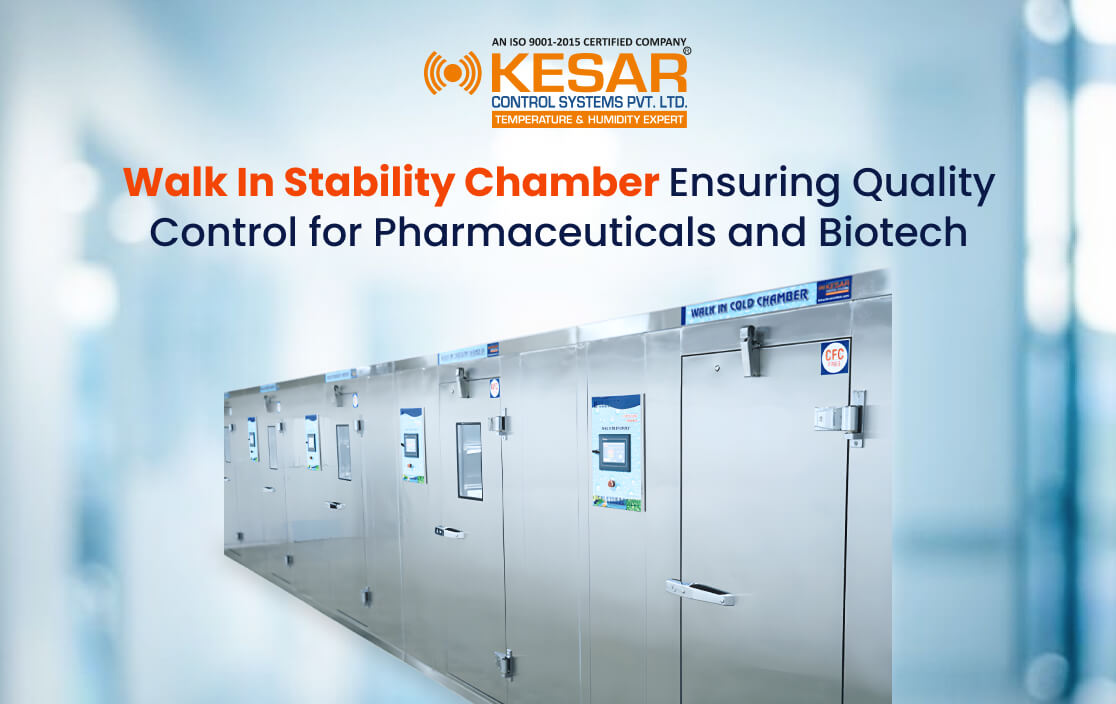
Walk In Stability Chambers: Ensuring Quality Control for Pharmaceuticals and Biotech
In the pharmaceutical and biotechnology industries, maintaining product quality, safety, and efficacy is critical. Medicines, vaccines, and biological...

Why Photostability Chambers Are Essential for Pharmaceutical Stability Testing in India
Why Photostability Chambers Are Essential for Pharmaceutical Stability Testing in India Advanced Photostability Chamber for ICH-Compliant Stability...

Exploring the Role of Humidity Chambers in Environmental Stress Testing
In today’s quality-driven industries, products must perform reliably under varying environmental conditions. From pharmaceuticals and electronic...

Understanding Humidity Chambers Key Applications in Research and Development
Research and development across industries demand precision, accuracy, and the ability to replicate real-world environmental conditions. Whether it&rs...

How Photostability Chambers Contribute to Quality Control Across Industries
Introduction In today’s competitive and highly regulated industries, product stability is one of the most critical factors in ensuring safety...